Immigrants Rebuilding Detroit: Resilience and Hope Among Restored Homes

By Sandra Hernández / Latino Press — When the City of Detroit filed for bankruptcy in July 2013 under Chapter 9—with an estimated debt of $18 billion—the crisis seemed insurmountable. The causes were structural: the decline of the auto industry, the exodus of residents, a shrinking tax base, and heavy pension and creditor obligations.
Yet out of that crisis came an opportunity for urban transformation. It was during this time that the Detroit Land Bank Authority (DLBA) strengthened its mission to “return neglected and vacant properties to productive use,” offering multiple ways for residents to purchase homes and lots. Through programs such as “Auction” and “Own It Now” for homes, and “Side Lots” and “Neighborhood Lots” for vacant land, Detroit began to rebuild one property at a time.
From opportunity to challenge
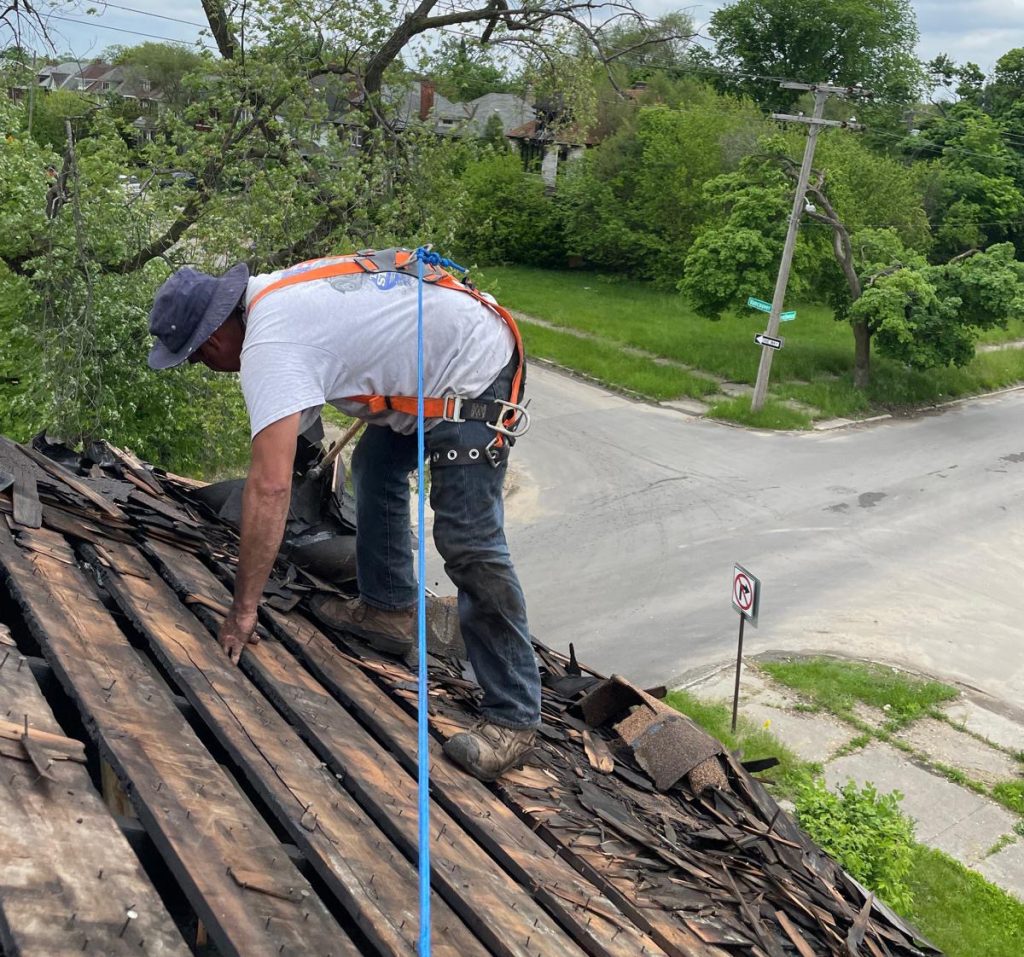
For many immigrants, Detroit did not seem like the ideal place to live. But for Geizi Mora, a Mexican immigrant who had lived in Texas for more than eight years, Detroit represented possibility. In 2017, he moved to the city with his wife and three children after a friend from church told him about the opportunity to buy homes for as little as $1,000. “In just two months, we bought two houses with the intention of fixing them up,” Geizi recalls. “We had never owned a home in the U.S., and it felt like a real chance to build something.” These homes, however, were far from livable. Geizi also purchased another house for $27,000—a property that, despite its condition, became their new home in the Motor City. By day, Mora worked as a professional house painter. After his shift, he would dedicate two or three additional hours each evening to rebuilding the houses he bought—investing not only time but also his savings into abandoned, burned, or uninhabitable properties. “When I see a house, I can already picture how it will look, what colors to use, how to repair it,” he says. “What I can’t do myself, I hire local workers or small business owners to help. It’s my way of supporting the community while rebuilding.”
A lesson in resilience
What began as an opportunity soon became a challenge. Unfamiliar with the area, Geizi purchased one property through auction in a neighborhood affected by crime. “They broke into the house, vandalized it, and even threatened us,” he recalls. “That’s when I learned you have to be careful where you invest.” From then on, he would visit properties at different times of the day—morning, evening, and night—to understand the neighborhood before committing to a purchase. “If I saw too much vandalism or gang activity, I wouldn’t buy there,” he explains. Detroit offers several homebuyer assistance programs, such as the Detroit Homebuyer Downpayment Assistance Program, which provides grants of up to $25,000 toward down payments, closing costs, or principal reductions. However, eligibility requirements—such as not having owned a home in the past three years and maintaining an income below 300% of the federal poverty level—can make access difficult for many working families like Mora’s. For those unable to qualify, the challenge is greater—but so is the pride in what they accomplish through their own effort.
Health and hard work
Years of intense physical labor have taken a toll on Geizi’s health. Chronic back pain limits his ability to work long hours, and he often resorts to self-medication because, as he says, “healthcare in this country is too expensive.”
Still, he perseveres. “I feel proud to contribute to this country,” he says. “I would tell others not to be afraid to invest in Detroit. If I can do it—even with back pain—so can they.” Together with his wife and three children, Geizi now owns three houses and three duplexes that he rents out. What started as a dream of homeownership has grown into a mission to revitalize neglected neighborhoods, improve Detroit’s housing stock, and provide affordable rental options for new residents.
A new chapter for the city
The impact of Mora’s work extends far beyond his own family. Every occupied home, every restored lot, and every renewed block strengthens the social fabric of Detroit. It is a reminder that urban revitalization isn’t driven solely by big developers or government programs—but also by everyday people with determination and vision. According to a recent city report, the Detroit Land Bank Authority has reduced its inventory of abandoned homes from roughly 45,000 to fewer than 2,000 currently in the sales process. Immigrants like Geizi Mora—who took a chance on blighted, unsafe properties and transformed them into homes—are living proof that rebuilding Detroit is both a community effort and a personal act of faith. Each restored house is another piece of the puzzle in the city’s ongoing story of resilience and renewal.
- Spanish version: Inmigrantes que reconstruyen Detroit: Resiliencia y esperanza entre casas rescatadas
Further reading
- Detroit Housing Market Study (PDF)
- Vacant Lots – City of Detroit
- Detroit Homebuyer Downpayment Assistance Program
- https://detroitmi.gov/es/departments/departamento-de-vivienda-y-revitalizacion/compradores-devivienda/programa-de-asistencia-para-el-pago-inicial-de-detroit/aplicar-ahora
- Community Builders – Great Lakes Region
- https://tcbinc.org/communities/great-lakes/


